


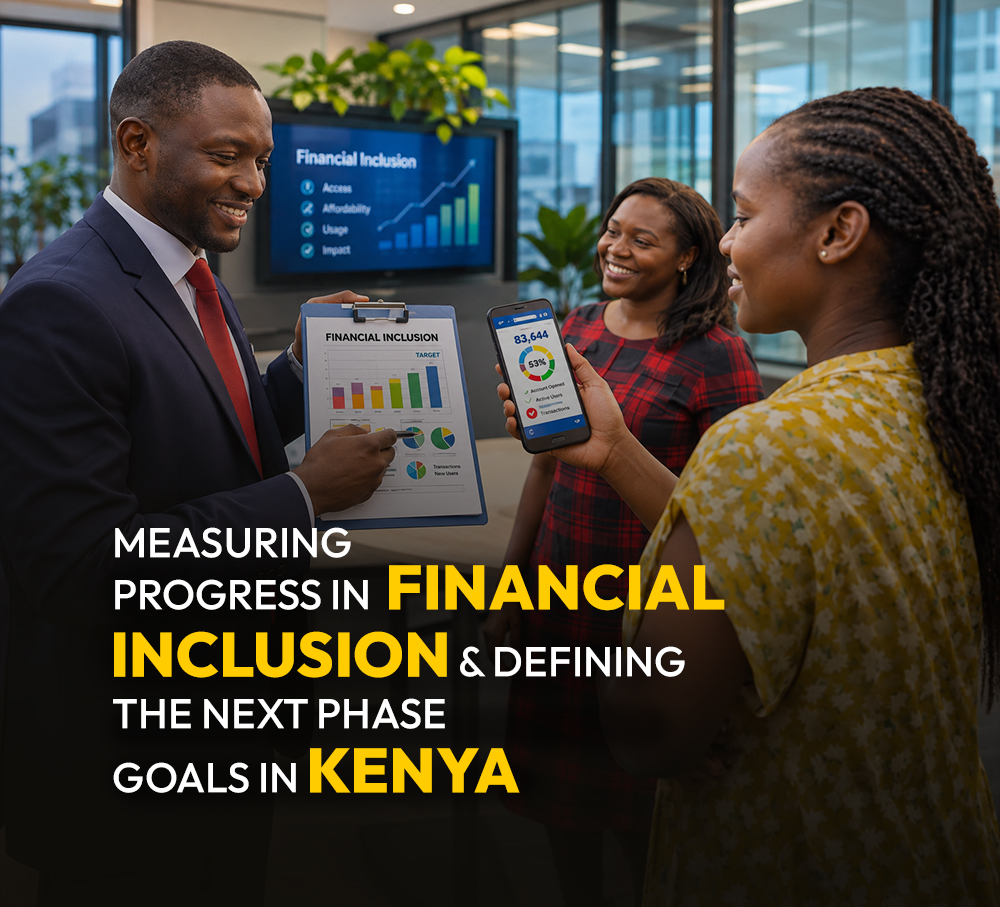
In recent years, Kenya has made clear progress in extending financial services to the population. Most adults now have access to mobile money platforms. Yet many find it difficult to use these tools regularly or for consistent financial stability. To fill the remaining gaps, officials launched the National Financial Inclusion Strategy for 2025 to 2028. The new framework focuses more on the actual use of services, product standards and better safeguards for users.
By tracking regularly one can see which methods are working well and which areas need more attention. Clear targets mean that banks, regulators and technology groups can coordinate their work to see tangible results.
Understanding Financial Inclusion in Kenya
What Does It Mean
Financial inclusion provides the opportunity for all adults to have access to affordable and useful financial products and services. These include simple ways to send and receive funds, build savings, access loans when needed, and get coverage through insurance. The real win is so much more than just signing up for an account. The critical test comes from a coherent use that meets the needs of routine and longer-term goals.
Regulators and analysts assess results along four interrelated dimensions: service availability, frequency of use, quality of offerings and the apparent difference they make for households and small businesses.
Present Situation
Kenya has taken the lead in the region on financial inclusion. The 2024 FinAccess Household Survey numbers indicate that 84.8 percent of adults use formal services. This reading continues to move forward from previous readings. Mobile money is the primary channel, with 52.6 percent of adults using it on a daily basis.
Mobile banking Kenya is central to many transactions. M-Pesa and similar arrangements allow for quick transfers and payments without having to go to a bank branch. Today, lots of fintech solution providers in Kenya are embedding savings, small amounts of credit and insurance directly on mobile handsets. Cities see more activity, but there are still challenges for some rural districts and younger demographics.
Why it’s important
Financial inclusion is a catalyst for broader economic activity and poverty reduction. Small businesses get paid right away, farmers can access lines of credit to buy supplies, and families have money put aside for unexpected bills. A wider participation leads to a stronger national economy and spreads stability.
This direction also promotes more equilibrium. Women, young people and those in remote areas find their ways to increase earnings and influence decisions. Reliable services decrease dependence on expensive informal sources and improve resilience to shocks, e.g. crop failure or health problems. Together, the approach creates a foundation for growth that extends into more areas.
Measuring Progress: Key Indicators and Achievements
Principal metrics used
Progress is tracked by teams using recognised tools such as the FinAccess Household Survey. Key indicators include the share of adults who have formal accounts, how often the service is used and financial well-being. Financial well-being involves managing the flow of cash from day to day, being able to absorb shocks, and trends in saving or looking forward.
Further reviews consider differences by gender and geography, levels of uptake of insurance and ongoing interaction with credit or deposit products. Supervisory groups also review payment flows, agent distribution and user reports to ensure services are protected and priced sensibly.
Kenya’s key achievements
Over the past two decades, Kenya’s financial sector has seen significant changes. Formal inclusion jumped significantly with early steps in digital payments. Kenya’s mobile banking revolution brought millions into the fold who had not previously participated in the formal banking system.
Those advances inspired more Kenyan fintech operators to develop solutions for local conditions. By all accounts, the country today seems to be among the best in the world in terms of mobile money coverage and effective infusion of technology into everyday financial transactions.
Highlights of recent progress
There were a few positive moves in the 2024 survey. Daily mobile money activity more than doubled compared to 2021. The gap between men and women in access widened again. Solutions under the common tag of “Fintech Kenya” offered more choices for small-scale loans and deposit facilities.
By the end of 2025, the sector was given a targeted plan with the publication of the National Financial Inclusion Strategy. These developments reaffirm that digital transformation continues to deliver results even as the focus shifts from mere access to sustained and meaningful engagement with services.
Setting Goals for the Next Phase
The Importance of Clear Goals
Higher inclusion rates introduce a new emphasis, assisting people to gain more benefits from the services available. A large proportion of adults continue to have huge debts or limited savings for future needs. If objectives are not clear, forward momentum can slacken and some sections can become less noticed.
Goals Proposed
The National Financial Inclusion Strategy identifies six key priority areas for the period 2025-2028. Priorities include extending reach in underserved areas, increasing the consistent use of reliable products, and improving knowledge of financial issues. Other attention is paid to financing to support environmental goals and assistance for farming districts.
Increased use of active accounts, higher rates of formal saving and greater insurance coverage are concrete targets. The framework also aims to reduce the average cost of mobile transfers and increase inclusion for women, youth, persons with disabilities, and small business owners.
Different Players Role
All over the country, state institutions develop policies and plan programs. Commercial banks and microfinance institutions are the core providers and sit at the links with technology partners. The fintech groups in Kenya are moving forward with better user interfaces and better ways of assessing credit.
The networks run by telecom operators enable mobile banking in Kenya. Support organisations and community groups offer training and outreach services to remote areas.
Challenges and Overcoming Challenges
Common Problems
Several recurrent problems impede faster progress. Remote locations often suffer from poor coverage and a lack of agent presence. Many people are not financially literate, and don’t know how to pick the right thing or avoid expensive borrowing. Digital credit has expanded rapidly, raising concerns about growing debt.
Other impediments include the price of the device or data bundles, lack of recognised identity documents and different levels of trust in specific digital platforms. Variations related to gender and age group are still conspicuous in some areas.
Practical Solutions
Dedicated programs can help narrow these differences. Programs to enhance digital skills in schools and local community centers empower users to run services with increased confidence. Oversight authorities can impose direct regulations on responsible lending, and data.
Working together, banks and fintech solution Kenya developers keep costs low and align products with real needs. Expanded agent networks and offline capabilities in remote areas push digital transformation forward, without excluding groups.
Attend WFIS Kenya 2027 and Lead the Way in Measuring Progress and Setting Goals for Financial Inclusion in Kenya
World Financial Innovation Series (WFIS) Kenya brings together the key players that are leading developments in the space. The influential financial inclusion conference speakers at this premier event share grounded observations on measurement approaches, strategies and delivered results.
Discussions give key insights into fintech Kenya, improvements to Kenyan mobile banking, and tried and tested arrangements for fintech solutions in Kenya. Exchanges also look at digital transformation measures with visible effects. Attendees leave armed with new ideas and contacts to support the next phase of inclusion work in Kenya.