


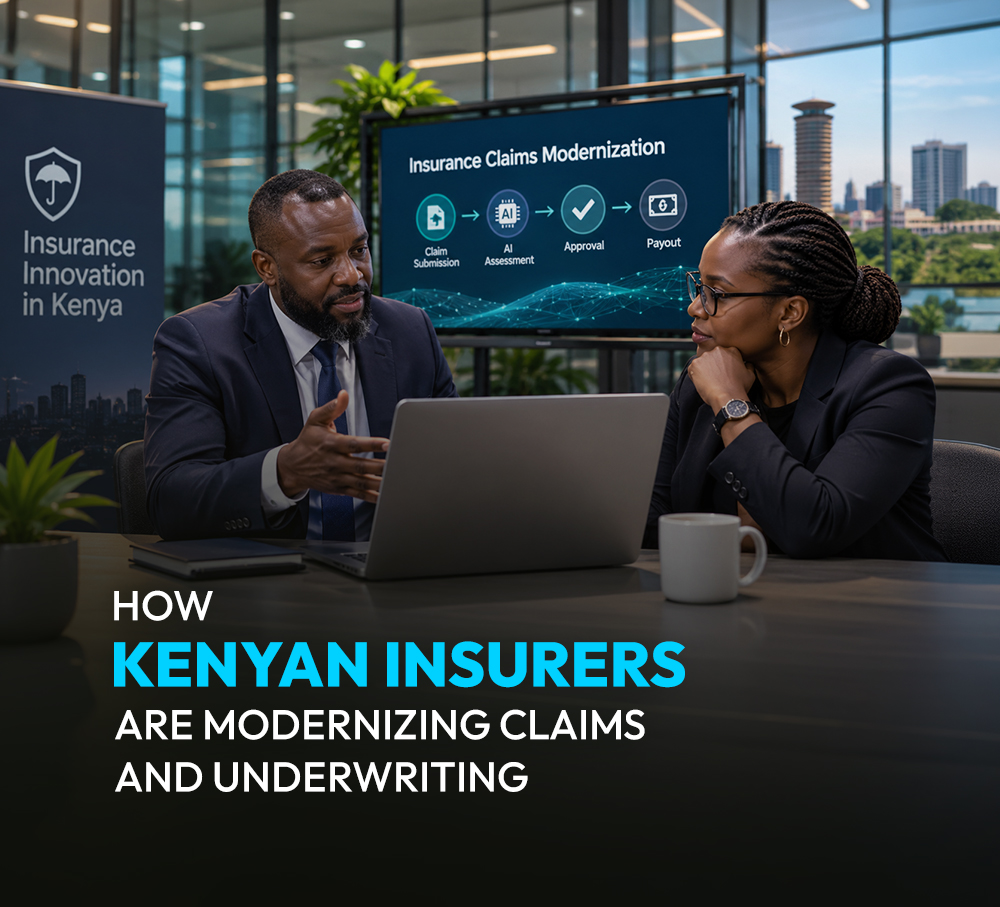
Insurance depends on a simple promise: when a customer experiences a loss, the insurer should provide the protection outlined in the policy. Yet slow claim settlements, extensive documentation, and inconsistent risk assessments can undermine that promise. As customer expectations rise, Kenyan insurers are reconsidering how they collect information, evaluate risk, and process claims.
Digital transformation is becoming central to this shift, connecting data, automation and customer service. The challenge is to improve operational efficiency without compromising fair decisions, regulatory compliance or policyholder trust.
Insurance Is Becoming a Data and Automation Problem
Kenya’s insurance industry is expanding, increasing the importance of accurate pricing and efficient claims management. According to the Insurance Regulatory Authority (IRA), total industry gross written premiums reached KES 352.29 billion by September 2025, an 11.2% increase from the corresponding period in 2024. Claims and policyholder benefits amounted to KES 97.71 billion during the same period.
These figures highlight the scale of the decisions insurers must make. Underwriters need reliable information to estimate exposure, while claims teams must distinguish legitimate losses from errors and potential fraud. Disconnected records and manual reviews can slow both processes.
Financial technology in Kenya offers opportunities to connect policy administration, mobile payments, customer identification and claims processing. With suitable data governance, insurers can build a clearer picture of risk and identify operational bottlenecks. However, automated recommendations must remain explainable, with appropriate human review for disputed or complex cases.
Rebuilding the Claims Journey Around Automation
Traditional claims processing can involve multiple handoffs between customers, agents, assessors and settlement teams. Each handoff creates opportunities for missing documents, repeated requests and delays. Automated workflows can reduce this friction by directing claims through predefined steps based on policy conditions, claim type and risk indicators.
For example, a motor insurance customer could submit a claim through a mobile portal, upload photographs, provide incident details and receive updates without repeatedly contacting a branch. Optical character recognition can extract information from documents, while workflow rules can flag missing evidence and route unusual cases to specialists.
Banking automation offers a useful parallel for insurers managing identity verification, payment reconciliation and customer notifications. Similar principles can help insurance teams reduce repetitive administrative work and focus on decisions requiring professional judgement.
The objective is not to approve every claim automatically. It is to settle straightforward, well-documented claims efficiently while directing suspicious or complicated cases to trained investigators. Clear communication about required evidence, processing stages, and settlement decisions remains essential to customer confidence.
Computer Vision and Alternative Data in Loss Assessment
Assessing a loss often requires more than just a written description. Computer vision allows insurers to analyse images of damaged vehicles, buildings and other insured assets to identify visible damage, classify its severity and support repair estimates. Combined with location data and digital documentation, these tools can help assessors process routine cases faster and concentrate on complex investigations.
Alternative data can also improve underwriting, particularly where customers have limited conventional insurance histories. Agricultural insurers, for instance, can combine weather observations, satellite imagery, and verified farm information to assess exposure to drought, excessive rainfall and crop damage. However, data quality, privacy safeguards and model accuracy must guide these decisions.
Parametric Insurance for Kenya’s Underserved Markets
For farmers, small businesses, and households exposed to weather-related losses, conventional claims assessments can be expensive and time-consuming. Parametric insurance offers an alternative by paying an agreed benefit when a predefined, measurable event or threshold is reached, such as rainfall falling below a specified level.
Instead of assessing every individual loss, insurers use an agreed index supported by reliable data. This can simplify settlement and make certain insurance products more practical for customers in remote areas. Mobile money can also facilitate premium collection and benefit payments, reducing the need for customers to travel to physical offices.
However, parametric products carry a specific risk: the index may trigger a payout that differs from the customer’s actual loss, or fail to trigger despite damage. Transparent policy terms, suitable data sources and carefully designed thresholds are therefore essential. Insurers must also ensure that customers understand what the policy covers before purchasing it.
Creating an Insurtech Operating Model That Can Scale
Technology investments deliver stronger results when insurers redesign processes instead of simply transferring paperwork onto digital platforms. A scalable operating model connects underwriting, policy administration, claims, fraud detection and customer support through reliable data exchange.
Executives should prioritise practical improvements, measure settlement times and error rates, and establish clear accountability for automated decisions. Integration with legacy systems also matters because fragmented platforms can create duplicate records and inconsistent policy information.
Cybersecurity and regulatory compliance must remain integral to implementation. Insurers need appropriate access controls, secure data storage, audit trails and safeguards aligned with Kenya’s data protection requirements. Staff training is equally important, ensuring that underwriters and claims professionals can interpret system recommendations and challenge questionable outcomes.
The long-term opportunity is to make insurance easier to understand, purchase and use while preserving sound risk management. For Kenya’s insurance sector, that means connecting technical capability with affordability, accountability and wider access to protection.
Modernize Kenya’s Insurance Value Chain at WFIS Kenya
Join senior executives, industry leaders, technology providers, sponsors and policymakers at the World Financial Innovation Series (WFIS) in Kenya on 2 March 2027 at Edge Convention Centre, Nairobi to examine how insurtech can improve claims processing, refine risk assessment and extend insurance access to underserved communities.
As insurers navigate changing customer expectations and evolving market demands, discussions around automation, computer vision, parametric insurance, and data-driven underwriting will be increasingly relevant. The challenge lies in applying these technologies to real operational problems while maintaining accurate assessments, transparent policy terms, and appropriate oversight.
WFIS Kenya offers a valuable opportunity to explore these developments and consider how digital capabilities can translate into more reliable insurance services across the country.
Frequently Asked Questions (FAQs)
How is technology changing insurance claims in Kenya?
Digital claims platforms, automated document processing and image analysis help insurers reduce repetitive tasks, improve tracking, and direct complex claims to specialists for review.
How does automation improve underwriting?
Automation helps underwriters collect information, apply consistent rules, and identify risk indicators faster, while human oversight supports fair decisions and exceptions.
What is computer vision in insurance?
Computer vision analyses photographs and other visual inputs to help identify damage, classify its severity, and support insurance assessments.
How does parametric insurance work?
Parametric insurance pays an agreed benefit when a predefined measurable event meets specified conditions, reducing reliance on individual loss assessments for eligible claims.
Why should insurance leaders attend WFIS Kenya?
WFIS Kenya connects financial executives, policymakers, sponsors, and technology providers to explore partnerships and discuss practical approaches to financial innovation.