

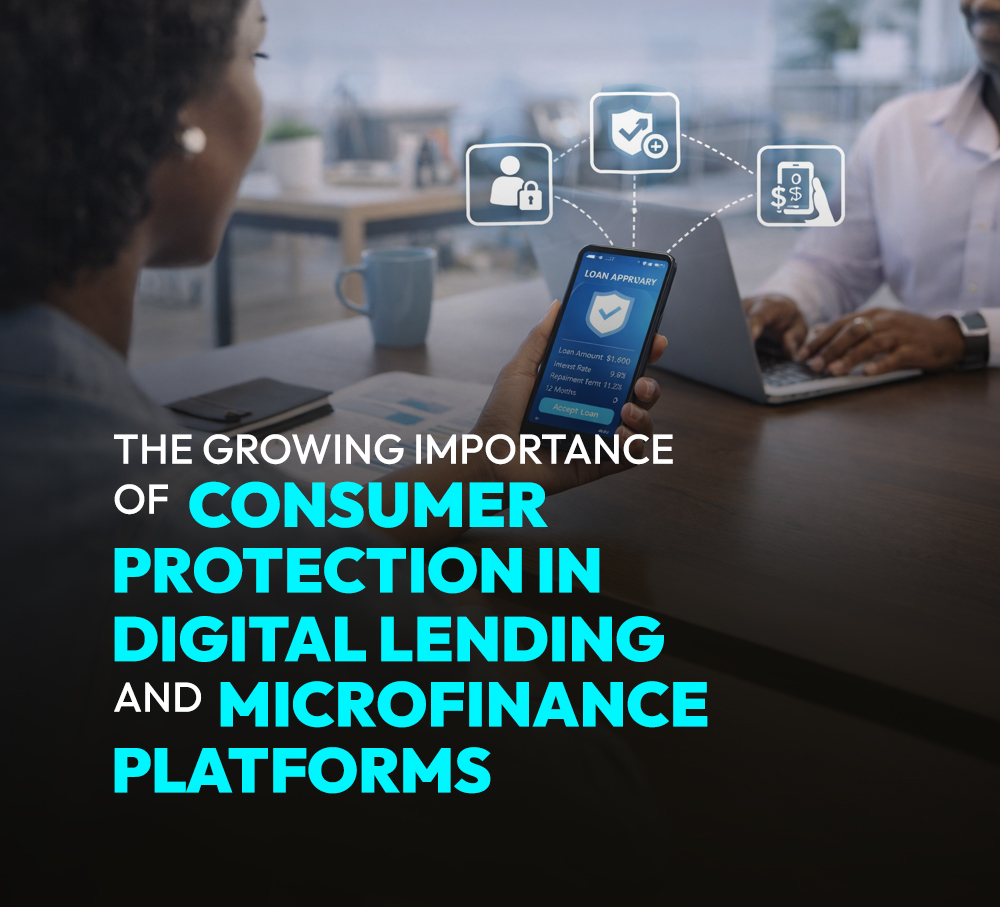
Kenya stands out in digital finance across Africa. High mobile phone ownership and quick adoption of new technology have driven the nation’s progress in the sector. Digital lending and microfinance platforms now actively serve millions of people who never had easy access to credit before. These services supply fast loans to cover daily needs, or support small businesses. The speed of growth, however, brings new risks for those who borrow.
Consumer protection, therefore, has become crucial. It helps ensure lending stays fair, transparent, and compliant. Rules that oversee loan terms, ethics of data use, and methods of debt collection create stronger confidence among users.
When such measures stay weak, problems like taking on too much debt or facing surprise charges hurt individuals and hold back overall development. Effective safeguards therefore benefit both ordinary people and the larger economy. They position digital finance as a genuine tool for inclusion instead of a source of new difficulties.
Understanding Digital Lending and Microfinance Platforms
What They Are
Digital lending platforms deliver short-term loans through simple, user-friendly mobile applications and web-based systems, while microfinance platforms focus on providing small loans to low-income families or small businesses.
In Kenya, a few platforms use these two models. They reach individuals who stay outside the conventional banking system, particularly those living in rural zones or working in the informal sector. The entire operation depends on mobile networks more than any physical office locations. They contribute directly to the fintech developments in Kenya to widen financial access.
How They Work
A borrower simply fills out an application in a matter of seconds on a smartphone. The platform then reviews data from call records, past transactions, and various other indicators to evaluate creditworthiness. Approvals frequently arrive within minutes. Money then transfers immediately into a mobile wallet. Repayments travel back the same route, supported by automatic alerts. Such a process eliminates the need for extensive paperwork and lengthy approval times.
It continues the proven model seen in the mobile banking ecosystem of Kenya, where tools such as M-Pesa manage everyday money transfers for huge numbers of users.
Key Features
A number of characteristics make these platforms different from older options. Loans receive approval instantly and require no collateral at all. Rates of interest and all fees are shown clearly at the start and use simple wording. Several platforms link straight into current mobile money accounts to create smooth experiences. Certain ones include helpful features for tracking budgets or monitoring repayments. Still others place credit choices directly within shopping or utility applications. Such additions turn financial services faster and simpler for ordinary daily use.
The Growing Importance of Consumer Protection
Rising Risks in the Digital Era
- Unclear loan terms and high costs: Some borrowers face confusing lending conditions, hidden charges, or high interest rates that make repayment difficult
- Aggressive debt collection: Certain lenders use inappropriate collection practices, causing stress and financial hardship for borrowers
- Data privacy concerns: Personal information may be collected or shared without consent, raising privacy concerns and triggering complaints
- High default rates: Small-loan borrowers may struggle to meet repayment obligations, especially when managing multiple loans
- Fraud and cybersecurity threats: Digital lending platforms face risks such as identity theft, fraudulent transactions, data breaches, and other cyberattacks
- Weak consumer protection: Inadequate safeguards and limited awareness of borrowers’ rights can leave customers vulnerable to unfair practices
- Erosion of trust in formal finance: These challenges can undermine confidence in digital lending services and discourage people from participating in the formal financial system
Regulatory Evolution
Authorities in Kenya introduced revised guidelines in response.
The Central Bank now insists on official licensing for credit providers that do not accept deposits. Additionally, newer adjustments prohibit any form of harassment in the repayment process and insist on complete transparency about every single charge. All these measures close earlier loopholes and bring local practices in line with accepted international benchmarks. They represent movement away from minimal supervision towards organized oversight that fits the pace of sector expansion.
Impact on Trust and Sustainability
Reliable protection steps generate solid confidence among users. Borrowers feel more comfortable taking loans once risks become plain. Platforms keep steady customers and spend less on settling disagreements. A steady environment draws in funding and backs continued expansion. This way, consumer safeguards maintain digital finance as inclusive and remain sustainable for the long run.
Benefits of Strong Consumer Protection
For Borrowers
Effective regulations generate genuine confidence among users. People feel more comfortable borrowing once they fully know the potential risks involved. Platforms enjoy greater customer loyalty while seeing their costs from disputes drop. When the sector remains stable, it draws in more investment and lays the foundation for sustained expansion. Ultimately, these consumer safeguards ensure that digital finance stays truly inclusive and remains sustainable well into the future.
For Platforms and Lenders
Practices built on responsibility bring down default rates across time. Platforms escape large penalties and court cases by following required standards. Greater trust results in repeated usage and positive recommendations; while lenders develop stronger reputations that make it easier to form alliances with banks or funding sources.
Meeting compliance requirements further streamlines day-to-day operations by establishing uniform methods for assessing risks and preparing reports.
For the Economy
When a sector operates under solid protections, it encourages wider participation. An increased number of individuals join the formal financial system, and this stimulates both consumer spending and investment activity. Moreover, small businesses obtain reliable credit lines that allow them to expand operations.
With fewer instances of fraud or disagreements, resources become available for more productive purposes. In broad terms, these consumers safeguard financial stability across the board and advance the country’s objectives related to economic growth.
Challenges and How to Overcome Them
Common Obstacles
Digital lending platforms face several challenges, such as limited financial literacy among certain users, which can make it difficult to understand loan terms, assess borrowing costs, and manage repayments effectively.
Some borrowers overlook important conditions or underestimate the total cost of credit. Data privacy requirements also demand continuous updates to systems and processes, while differences in regulations across jurisdictions create additional compliance challenges. For smaller lenders, licensing fees and the costs of meeting regulatory requirements can be particularly burdensome, limiting their ability to compete and expand their services.
Practical Solutions
Addressing digital lending challenges requires collaboration between financial institutions, regulators, and consumers. Key solutions include:
- Improve financial literacy: Educate borrowers on loan terms, costs, and repayment obligations
- Simplify loan information: Present fees, interest rates, and other necessary conditions in comprehensive language
- Strengthen regulations: Establish consistent standards for lending practices and data privacy
- Enhance security: Invest in fraud detection and secure digital systems
- Build partnerships: Encourage banks, fintech firms, and microfinance institutions to share best practices
- Update regulations: Review policies regularly to address emerging risks and technological changes
Join WFIS Kenya and Lead the Way in Consumer Protection for Digital Lending and Microfinance
Strengthening consumer protection in Kenya’s digital lending sector requires collaboration among banks, microfinance institutions, fintech companies, and regulators. The World Financial Innovation Series (WFIS) in Kenya provides the ideal platform for these stakeholders to exchange practical insights on responsible lending, data privacy, regulatory compliance, and inclusive financial services.
Through industry discussions and networking opportunities, participants can explore innovative solutions that protect borrowers and support sustainable growth.
Taking place on 2 March 2027 at the Edge Convention Centre in Nairobi, Kenya, WFIS Kenya offers industry professionals an opportunity to discover emerging fintech solutions, discuss evolving market trends, and build partnerships that advance responsible digital finance. By participating, organizations can strengthen their industry networks, prepare for changing regulatory requirements, and contribute to a more secure, accessible, and inclusive financial ecosystem across Kenya and the wider region.