


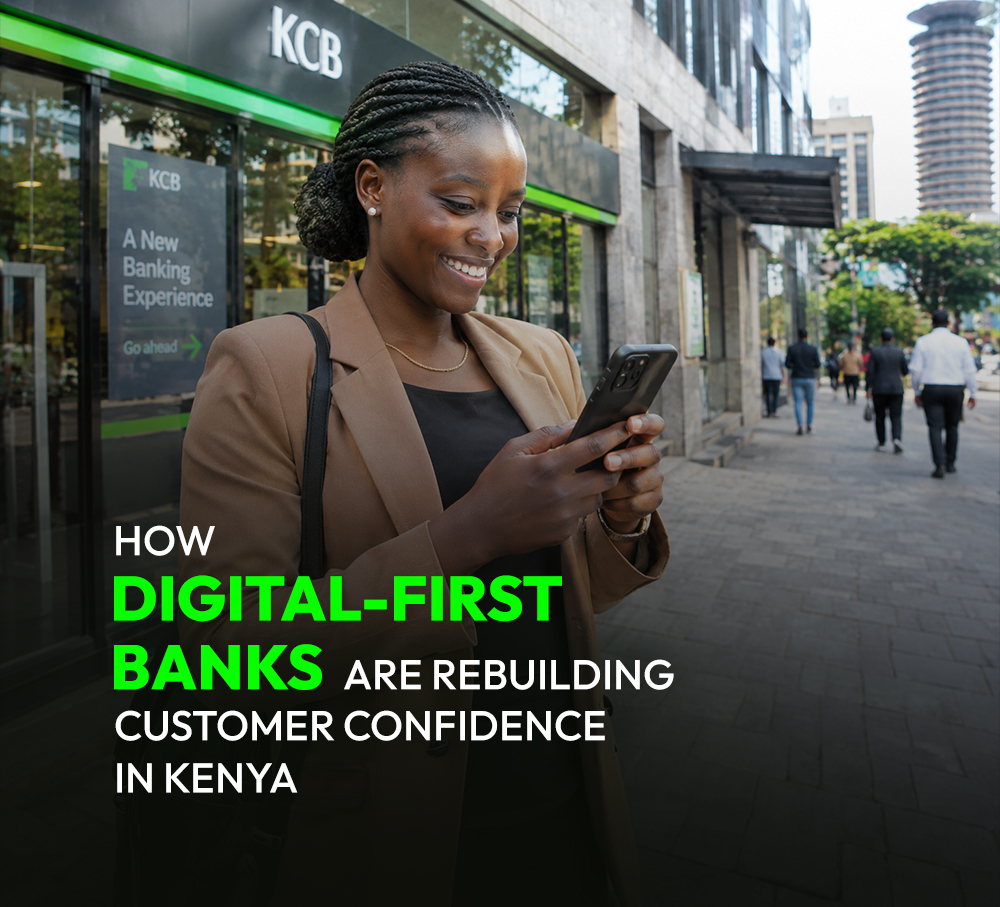
Digital banking depends on more than just convenient apps and quick transactions. Customers today need assurance that their funds are secure, their personal information protected, and their complaints attended to. In Kenya, where mobile-based financial services play a major role in everyday payments, these expectations influence how people choose and use banking services.
For financial institutions, rebuilding confidence means making security and dependable customer support part of every digital interaction.
Trust Starts Before the First Transaction
A customer forms an opinion about a bank before transferring money or opening an account. Unclear registration requirements, confusing interfaces and unexpected verification requests can create doubts at the outset. Banks must therefore explain their services, fees, eligibility requirements, and security measures in straightforward language.
Kenya’s established mobile money ecosystem has familiarised customers with digital payments, but transferring that familiarity to formal banking requires consistent service. Digital banks in Kenya must demonstrate that account access, transaction records, and support channels remain dependable beyond the initial sign-up.
Banks can strengthen this first impression through clear onboarding instructions, accessible help options and realistic information about transaction processing times. These measures help customers understand what to expect and where to turn when something goes wrong.
Designing Security Into Every Customer Interaction
Security failures can quickly undermine years of customer relationships. Phishing, social engineering, stolen credentials and unauthorised account access remain important risks for institutions delivering financial services through mobile applications and online platforms.
Banks need layered protection that includes multifactor authentication, transaction monitoring, encryption, secure session management, and alerts for unusual activity. Risk-based authentication can introduce additional checks when a transaction appears suspicious without adding unnecessary steps to every routine payment.
Kenya’s banking sector also operates under data protection and financial sector requirements. Institutions must treat customer information responsibly, restrict access to sensitive records and establish procedures for investigating suspected fraud.
However, security should not leave customers feeling powerless. Mobile banking services in Kenya can build confidence by offering straightforward ways to freeze access, report suspicious transactions and receive updates during investigations. Customers should understand what the bank will do when their accounts may be at risk.
Transparency as a Digital Banking Feature
Unexpected charges, unexplained transaction failures and vague complaint responses can damage customer confidence even when a bank’s technical systems remain secure. Transparency helps close this gap between the service a bank promises and the experience customers receive.
Digital interfaces should display applicable fees before confirmation, distinguish pending transactions from completed payments and explain delays in plain language. Customers should also be able to access transaction histories, download statements and track complaints without navigating multiple channels.
For bank executives, transparency is an operational commitment rather than a design choice. Published service standards, consistent disclosures, and clear escalation procedures give customers a better understanding of their rights and available remedies. These practices also help institutions identify recurring service problems before they lead to wider dissatisfaction.
e-KYC Without Creating New Friction
Electronic Know-Your-Customer (e-KYC) processes help banks verify identities remotely, reduce paperwork and support faster account opening. However, poor implementation can exclude legitimate applicants, particularly people facing connectivity limitations, device constraints or difficulties submitting digital documents.
Banks should explain which documents are required, why information is collected and how applicants can correct rejected details. Secure identity verification, reliable document checks and carefully managed exception handling can reduce unnecessary delays without weakening compliance.
For digital banking providers, the challenge is to balance regulatory obligations with accessible onboarding. Alternative verification routes, human assistance for complex cases and clear rejection messages can help customers complete registration without repeated attempts.
Institutions should also review whether their verification processes produce unequal rejection rates across customer groups. An efficient system is valuable only when eligible customers can use it safely and fairly.
Measuring Whether Customers Actually Trust the Platform
Downloads, registrations, and transaction volumes indicate adoption, but they do not independently prove customer confidence. A customer may use an application because it is convenient while remaining concerned about fraud, hidden charges or the difficulty of resolving disputes.
Banks should combine operational data with direct customer feedback. Useful indicators include:
- Fraud and security: Confirmed unauthorised transactions, reported scams, and account recovery times.
- Service reliability: Application availability, failed transactions, and payment reversal times.
- Customer support: Complaint resolution rates, repeat complaints, and time to resolution.
- Customer experience: Satisfaction scores, trust surveys, and reasons for account inactivity.
These measures become more useful when reviewed together. For example, rising transaction volumes alongside increasing fraud complaints may indicate that adoption is outpacing customer protection. Regular reviews allow leadership teams to prioritise improvements based on evidence rather than assumptions.
Put Digital Trust at the Centre of Kenya’s Banking Conversation at WFIS!
Building trust in digital banking takes more than just secure technology. It requires transparent transactions, accessible e-KYC processes, responsive customer support, and measurable accountability. For Kenya’s banking sector, bringing these elements together is essential to strengthening customer confidence and ensuring that digital innovation delivers lasting value.
The upcoming World Financial Innovation Series (WFIS) in Kenya will take place on 2 March 2027 at the Edge Convention Centre, Nairobi. Bringing together senior executives, government officials, policymakers, sponsors, and fintech leaders, the event will provide a crucial, timely forum to exchange insights and explore practical strategies for advancing digital banking and financial inclusion.
Join WFIS Kenya to exchange insights, connect with industry decision-makers, and explore strategies for building safer, more inclusive, and customer-centric financial services across Kenya.
Frequently Asked Questions (FAQs)
1. Why is customer trust important for digital-first banks in Kenya?
Customer trust encourages people to adopt digital financial services, share necessary information, complete transactions confidently, and maintain long-term relationships with their banks.
2. How can Kenyan banks improve security in digital banking?
Banks can strengthen security through multifactor authentication, transaction monitoring, encryption, fraud alerts, secure account recovery and accessible channels for reporting suspicious activity.
3. What role does transparency play in digital banking?
Transparent fees, clear transaction statuses, accessible statements and timely complaint updates help customers understand banking services and make informed financial decisions.
4. How does e-KYC improve the digital banking experience?
Electronic Know-Your-Customer verification processes allow banks to verify identities remotely, reduce paperwork, and accelerate onboarding while maintaining appropriate identity checks and regulatory compliance.
5. What will the topic of discussions be at WFIS Kenya 2027?
WFIS Kenya 2027 will bring financial sector leaders together on 2 March 2027 in Nairobi to discuss financial inclusion, innovation, digital banking, customer trust, and digital growth.