


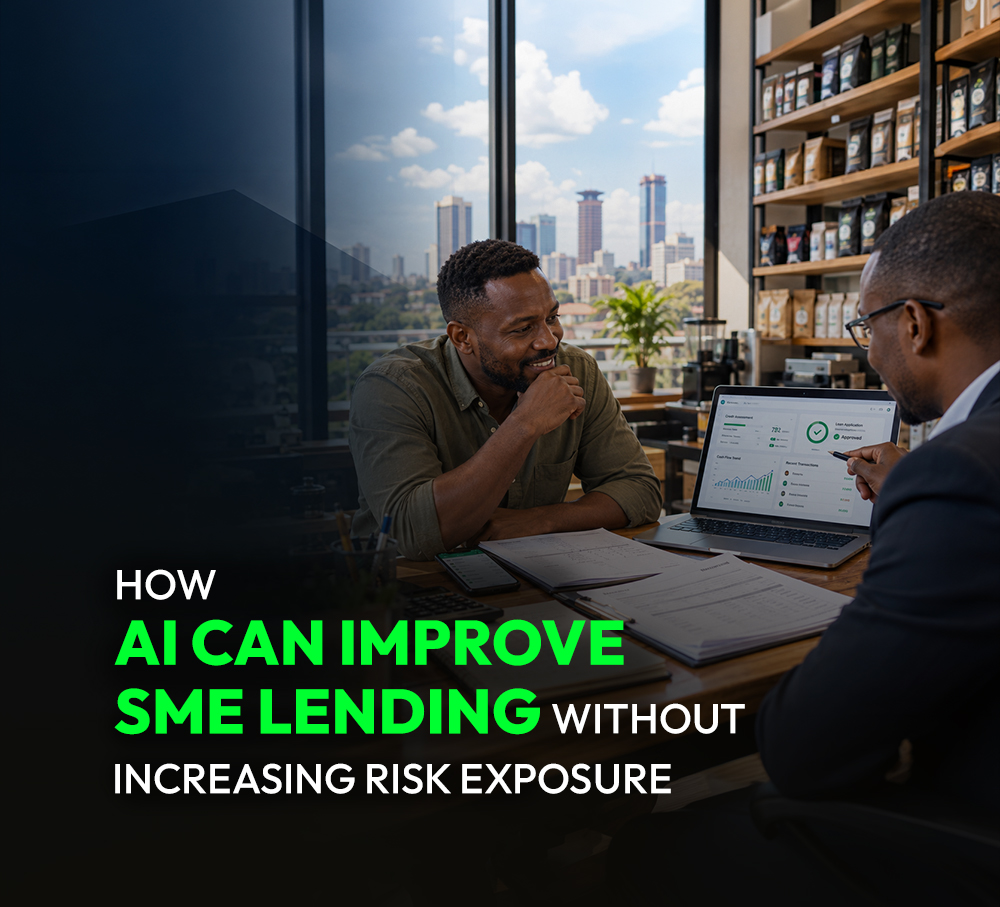
AI in SME lending refers to the use of machine learning and alternative data to assess small-business borrowers more accurately than traditional credit checks can. Kenya’s small and medium enterprises generate most of the country’s new jobs. Yet, the majority still cannot access formal credit because banks require collateral and paper trails that many businesses lack.
AI closes that gap by reading mobile money flows, transaction history, and repayment behavior in place of a physical file. Used correctly, it sharpens risk assessment, which matters for lenders competing in Kenya’s crowded credit market.
Understanding the SME Credit Gap in Kenya
The Scale of Unmet Demand
Kenya’s MSME financing gap exceeds 3 trillion shillings a year, which puts annual credit demand near 4 trillion shillings against a commercial bank supply of about 700 billion. SME lending in Kenya has grown through digital channels, yet most small businesses still cannot meet conventional collateral requirements.
Why Traditional Underwriting Falls Short
Traditional underwriting fails many Kenyan SMEs because it depends on audited statements, land titles, and years of banking history that informal businesses rarely have. Many run their finances through mobile money instead of a business account, which banks read as missing data rather than manageable risk, so they price loans higher or decline them outright.
How AI Strengthens Credit Risk Assessment
Alternative Data as a Risk Signal
Alternative data refers to the transaction records that lenders use instead of or alongside traditional credit files. These include mobile money history, utility payments, supplier invoices, and point-of-sale records.
Unlike a credit file that may be years old, this data updates constantly, giving lenders a live view of cash flow.
Machine Learning Models for Creditworthiness
AI credit scoring is a method that processes thousands of data points to produce a live risk score. It weighs patterns that a manual reviewer would likely miss, such as seasonal revenue dips or irregular supplier payments. This gives lenders a more up-to-date view of how the business is actually performing, rather than relying only on information available when the application was submitted.
Improving Accuracy Without Raising Exposure
Better data does not automatically mean looser lending. It allows lenders to separate genuinely risky borrowers from those lacking a paper trail, thereby approving more of that group while keeping underwriting criteria intact for higher-risk applicants.
AI-Powered Fraud Detection and Portfolio Monitoring
Identifying Suspicious Activity
Fraud in digital lending in Kenya often takes the form of identity mismatches, duplicate applications, or unusual transaction patterns intended to exploit automated systems. Machine learning can help lenders spot these signals more quickly by comparing new applications with patterns associated with known fraud across their customer base.
Ongoing Portfolio Surveillance
Risk does not end once a loan is disbursed. AI systems track repayment behaviour across an entire loan book, flagging accounts that show early signs of distress, such as a drop in mobile money inflows or a missed supplier payment. Lenders can then restructure repayment terms or proactively reach out, often preventing a recoverable dip from becoming a written-off loan.
Balancing Automation with Responsible Lending
Human Oversight in Automated Decisions
Automated scoring should support lending decisions, not make them on its own. Kenyan lenders may still involve a credit officer when a case is borderline or involves a larger loan. This allows the final decision to take account of factors the model may miss, such as a temporary disruption in the borrower’s supply chain.
Meeting Kenya’s Regulatory Requirements
Kenya regulates automated lending through the Central Bank of Kenya (Digital Credit Providers) Regulations, which require licensed lenders to protect borrower data and disclose how credit decisions are made. The Data Protection Act adds obligations around consent and data handling. AI in SME lending, for instance, works within these rules rather than outside them, keeping automated underwriting accountable to a supervisor.
Benefits for Lenders and Small Businesses
Advantages for Financial Institutions
Lenders using AI credit scoring gain measurable advantages: faster application processing, lower cost per borrower assessed, and earlier detection of default risk. That combination lets institutions extend credit profitably to segments they previously avoided.
Advantages for Small Business Owners
Business owners benefit from faster decisions, often within hours rather than weeks, and loan terms that reflect actual cash flow instead of a rigid checklist. A retailer with strong mobile money turnover but no formal collateral gains a real path to financing that traditional underwriting would have denied. Seasonal businesses, which often struggle with fixed underwriting cycles, can access credit when they actually need it.
Managing the Risks of AI Adoption
Addressing Bias and Data Quality
A model trained on incomplete or skewed data can reproduce existing biases on a larger scale, denying credit to groups that were already underserved. Lenders need to test models regularly against real outcomes and correct gaps in the data feeding them, rather than trusting a score simply because it is automated.
Protecting Borrower Privacy
Alternative data brings sensitive information into underwriting, from mobile money activity to social records in some markets. Kenya’s Data Protection Act requires lenders in digital lending to collect only what a credit decision genuinely requires, and to obtain clear consent for how that data is used.
WFIS Kenya Welcomes Leaders Building Safer Credit for Small Businesses!
The shift towards data-driven underwriting is reshaping how Kenyan lenders serve small businesses, and the institutions leading that shift will gather to discuss what works and what still needs fixing.
The World Financial Innovation Series (WFIS) in Kenya will bring together bankers, fintech leaders and regulators to examine how technology can expand access to credit without compromising risk controls. Taking place on 2 March 2027 at the Edge Convention Centre in Nairobi, the event provides a forum for industry leaders to share key lessons from the rapid shift towards automated lending.
The agenda includes discussions on fraud prevention, responsible AI governance and case studies from lenders using automated underwriting at scale. For those shaping the future of SME lending in Kenya, the event offers an opportunity to examine both the progress and the challenges that come with putting more lending decisions in the hands of technology.
Register today!
Frequently Asked Questions
How does artificial intelligence change loan assessments for small businesses?
It analyzes real-time transaction and mobile money data, giving lenders a fuller risk picture beyond collateral and paperwork alone.
Does automated scoring increase the risk of default?
No, it reduces blind spots by using a broader range of data, helping lenders separate genuine risk from a simple lack of records.
Are digital lenders regulated in Kenya?
Yes, the Central Bank of Kenya licenses digital credit providers and enforces data protection and consumer disclosure requirements by law.
Can algorithms replace human loan officers entirely?
No, most lenders keep officers involved for borderline cases, using automated tools to guide rather than replace final lending decisions.
What kind of data feeds these credit models?
Models typically draw on mobile money transactions, utility payments, supplier invoices, and point-of-sale records to achieve accurate scoring.