


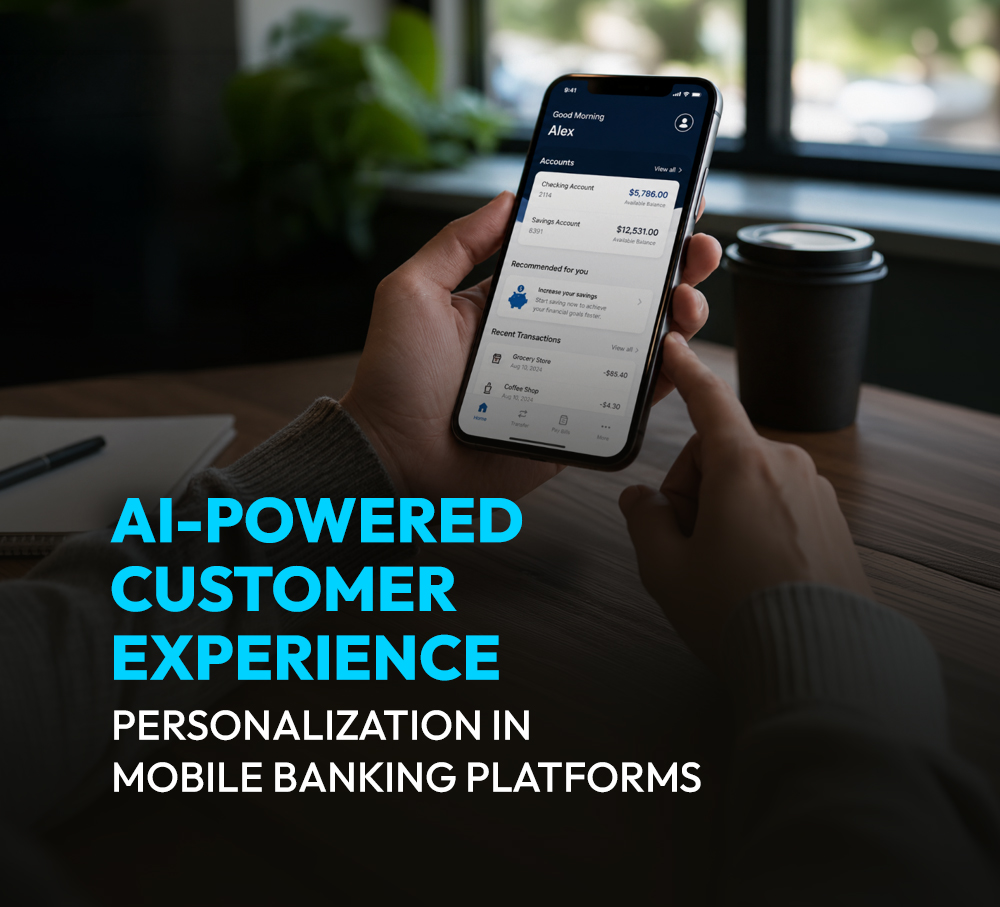
In Kenya’s mature mobile money market, competition has shifted from simple access to the quality of the user experience. Leading financial institutions are moving beyond basic digital services toward large-scale personalization. By using behavioral data and machine learning to anticipate customer needs, banks and fintechs are boosting loyalty and growth. This shift is central to the AI in banking exhibition circuit in Nairobi, where leaders are moving from pilot projects to full-scale deployments. The pressure to innovate is high, as the technology is ready and the cost of falling behind is high.
Why Personalization Has Become Essential in Digital Banking
Kenya’s mobile banking customer base is sophisticated. With 81 million registered mobile accounts and USSD and app-based transactions accounting for over 80% of digital payments, customers interact with financial platforms daily. They expect their bank to know their savings behavior, flag unusual spending, and offer relevant credit when the timing is right.
Digital banks in Kenya are no longer a niche category. Branch, Tala, and a growing list of neobanks have trained customers to expect instant decisions and tailored interfaces. Traditional banks face direct pressure to match that responsiveness or accept the attrition. Banks implementing AI-driven personalization report a 25-35% increase in product adoption and a 40% improvement in customer satisfaction. Kenya’s fintech ecosystem, valued at approximately USD 1.5 billion, generates enormous volumes of behavioral data daily. Institutions that build infrastructure to convert that data into actionable insight hold a durable competitive advantage over those still relying on demographic segmentation.
How AI Is Transforming Customer Engagement in Banking
Recommendation engines trained on transaction history and product usage patterns surface the right offer at the right moment. This is different from a banner ad. The recommendation is earned by relevance.
Conversational AI has matured beyond scripted responses. Today’s banking assistants carry context across sessions, handle multi-step transactions, and escalate intelligently to human agents. Banks implementing these systems have reported a 60% reduction in average call handling time.
Predictive models identify customers approaching a life event, such as a business expansion or school fees season, before they search for a product. That window is where banks with strong AI capabilities convert browsers into borrowers. These systems continuously learn from user interactions, meaning the personalization improves over time rather than degrading into stale templates. In a market like Kenya, where customer service volumes are high and margins on low-balance accounts are thin, automated resolution tools that handle routine queries around the clock deliver measurable operational value.
Building Omnichannel Banking Experiences Through AI
Personalization fails when it exists only inside the mobile app. A customer who moves from app to branch or USSD should experience continuity, not a reset. AI-powered customer profiles need to be channel-agnostic, feeding the same behavioral intelligence across every touchpoint.
Kenya’s legacy banking systems require architectural upgrades, not just new interfaces, to enable real-time data sharing across channels. AI enhances engagement by delivering contextual notifications and credit reminders based on individual behavior. In lending, AI streamlines applications by leveraging existing customer data, reducing dropouts, and ensuring faster, more accurate product matching.
Data Privacy, Security, and Compliance Considerations
Kenya’s Data Protection Act of 2019 establishes clear obligations for financial institutions that process behavioral data. Consent must be specific, informed, and revocable. Banks that treat compliance as a checkbox expose themselves to regulatory action and the erosion of customer trust.
AI is expected to reduce financial fraud by up to 50%, with advanced detection systems reporting 90% accuracy in identifying suspicious activity. In a market where mobile transaction volumes are growing at a pace, this capability is not optional. The Central Bank of Kenya’s migration to ISO 20022 in 2024 introduced an enhanced system-level fraud-detection infrastructure. Banks must align their AI personalization layers with these compliance frameworks rather than operating them in isolation. Customers increasingly aware of how their data is used will adopt personalized services more readily when banks communicate clearly about how AI influences product recommendations and credit decisions.
Strategic Priorities for Banks and Technology Providers
Scaling personalization necessitates platforms that automate data ingestion and model delivery across channels. In 2024, nearly 70% of financial firms saw AI-driven revenue growth, often through specialist partnerships rather than internal builds. For Kenyan institutions with limited budgets, this partnership model offers the most practical implementation path.
Smart Banking in Kenya depends on interoperable infrastructure. Open APIs, shared data standards, and modular technology stacks allow banks of varying sizes to participate in the personalization economy without requiring enterprise-level capital expenditure. Banks that embed AI personalization into a three-to-five-year technology roadmap, with KPIs tied to retention and product uptake, build compounding advantage rather than isolated pilots. Fintech technology that learns from every interaction and continuously improves its recommendations is what sustains customer loyalty at scale, because loyalty in mobile banking is now behavioral, not contractual.
Explore AI-Powered Banking Innovation at WFIS Kenya
The World Financial Innovation Series (WFIS) Kenya is East Africa’s premier summit for financial technology leaders. The 2026 edition hosted over 500 decision-makers from banks, insurers, and fintechs to discuss AI, digital engagement, and regulation. As the community looks toward the 2027 edition, the much talked about “Digital Bank Kenya Agenda” continues to grow in both urgency and scope. For technology providers, bank executives, and regulators building Kenya’s next chapter of financial infrastructure, WFIS Kenya is where that work gets done. Visit kenya.worldfis.com to stay updated on the 2027 edition.
Frequently Asked Questions
1. What does AI personalization in mobile banking mean for customers?
The banking app adapts to individual spending habits and financial goals to deliver relevant products, alerts, and support.
2. How do Kenyan banks manage data privacy when using AI personalization tools?
They comply with Kenya’s Data Protection Act of 2019, which mandates informed consent, secure data processing, and the right for customers to revoke access to their behavioral data.
3. Can smaller microfinance institutions in Kenya adopt AI personalization?
Yes. Modular AI tools available through fintech partnerships enable smaller institutions to start with targeted use cases, such as chatbots or credit decisioning, without a large upfront investment.
4. How does AI reduce fraud while improving customer experience simultaneously?
AI fraud models flag anomalies in real time while reducing false positives, meaning fewer legitimate transactions are blocked, and customers face less friction during normal activity.
5. What makes WFIS Kenya relevant to the AI in banking discussion?
WFIS Kenya convenes senior technology and business leaders responsible for AI adoption across Kenya’s financial sector, enabling strategy, vendor evaluation, and peer learning in one place.