


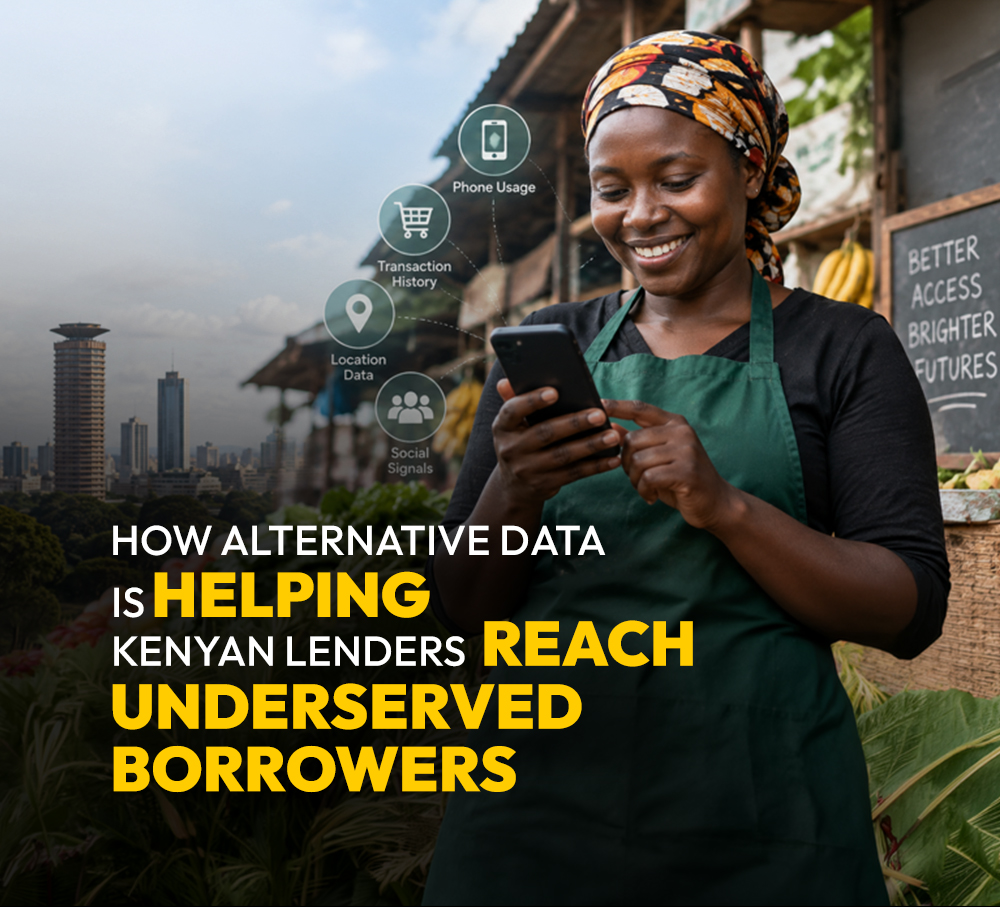
Alternative data helps Kenyan lenders extend credit to borrowers without payslips or formal bank histories by scoring them on mobile transactions, bill payments, and remittance patterns instead of paperwork. This approach closes a gap traditional lending never addressed, since a large share of Kenya’s working population earns informally and transacts mainly through mobile wallets rather than salaried bank accounts tied to formal employers.
For mobile banking users in Kenya, it means creditworthiness is now measured by real financial behavior, not paperwork they never had access to in the first place.
The Credit Gap Facing Kenyan Borrowers
Kenya’s credit gap exists because lending models were built for salaried, formally banked employees while most working adults are informal traders, farmers, or gig workers moving cash daily. Kenya is celebrated globally for mobile money innovation, with subscriptions now exceeding the adult population. Yet, a significant share of adults remain unbanked or underbanked and cannot access affordable, regulated credit.
Traditional lenders required collateral and formal statements that most lacked, pushing many towards unregulated digital lending apps that charge punishing rates and use aggressive collection tactics. This exclusion is the result of data mismatch. The borrowers’ financial footprints already exist in mobile transaction logs and daily trading receipts. Still, conventional banking institutions in Kenya were never built to read them at scale or turn them into lending decisions.
What Alternative Data Means for Lending
Alternative data refers to non-traditional financial information, such as mobile transaction patterns and utility payments, which is used to assess creditworthiness when formal bank records are thin or absent.
Lenders are therefore now able to examine mobile money transaction frequency, airtime top-up consistency, digital wallet savings behavior, and how promptly someone settles utility bills each month. These signals reveal discipline and cash flow stability that traditional documents cannot capture on their own, particularly for informal or seasonal earners whose income varies week to week.
For a fintech lender in Kenya, this means a trader with no formal payslip but a steady transaction history can be scored fairly within minutes. The result is a lending model built around actual behaviour rather than paperwork, reflecting how most Kenyans genuinely earn, spend, and manage money day to day.
Data Sources Powering Financial Inclusion in Kenya
Four data streams inform lending decisions across Kenya, each adding a distinct layer of insight into borrower reliability and repayment capacity:
1. Mobile Money and Telecom Activity
Transaction history from mobile banking platforms, combined with call and data usage patterns, gives lenders a near-real-time view of income regularity and spending discipline, making it the most reliable indicator for thin-file borrowers with no formal employment records.
2. Utility and Bill Payment Records
Consistent electricity, water, and pay-television payments signal financial responsibility, giving lenders a low-cost verification method that requires no payslip or years of formal employment history to establish trust.
3. Diaspora Remittance Data
Regular inflows from family abroad, increasingly moving through mobile banking channels in Kenya and licensed bank transfers, help lenders assess a household’s supplementary income and its genuine long-term repayment capacity over time.
4. Bureau and Alternative Data Collaboration
Credit reference bureaus now partner with alternative data providers, blending traditional bureau files with behavioral scores to produce a more complete and accurate borrower profile for underwriting decisions.
Benefits for Lenders and Borrowers
Alternative data lending creates measurable gains for both borrowers and lenders across three distinct areas of the credit relationship.
Faster and fairer loan approvals for first-time borrowers
Automated scoring using behavioural data lets lenders approve small loans within minutes, extending fair, dignified access to first-time borrowers who previously had no credit history to share.
Reduced default risk through richer behavioural insight
Lenders gain a clearer, earlier picture of repayment capacity before disbursing funds, lowering default rates and supporting more sustainable mobile banking lending portfolios over the long term for both parties.
Personalized loan terms based on actual financial behavior
Interest rates, repayment periods, and loan limits can be tailored to genuine cash flow patterns rather than generic risk categories, rewarding consistently disciplined borrowers with meaningfully better terms.
Regulatory Framework Guiding Responsible Data Use
Kenya regulates alternative data lending through the Central Bank of Kenya (Amendment) Act, 2021, which brought digital credit providers under formal CBK licensing and supervision after earlier public concern over predatory pricing, unethical debt collection, and data misuse. The subsequent Digital Credit Providers Regulations set clear conduct standards for lenders operating in this space.
The Data Protection Act, 2019, governs how personal and behavioral data is collected, stored, and shared, requiring documented consent and technical safeguards for every provider. Together, these frameworks protect banking in Kenya while allowing responsible innovation in credit scoring to keep expanding access.
Participate in WFIS Kenya and Connect with Leaders Driving Financial Inclusion!
The World Financial Innovation Series (WFIS) in Kenya brings together banks, regulators, and technology innovators shaping the next phase of financial inclusion across the region and beyond. Scheduled to take place on 2 March 2027 at the Edge Convention Centre, Nairobi, WFIS serves as a practical forum for lenders exploring alternative data, risk teams refining scoring models, and policymakers balancing innovation with consumer protection, among other key priorities.
Attendees exchange direct experience on deploying behavioral data responsibly, navigating compliance, and scaling credit access to underserved communities across the country. For any fintech company in Kenya working to close the credit gap, the summit offers direct access to the people building Kenya’s inclusive financial future together.
Frequently Asked Questions
What is alternative data in lending?
Non-traditional financial information, such as mobile money transactions or utility bill payments, that lenders use to assess a borrower’s creditworthiness.
Who benefits most from alternative data lending?
First-time borrowers, informal workers, and small traders without formal bank statements or established credit histories benefit from this lending model.
Is alternative data lending regulated in Kenya?
Yes, the Central Bank of Kenya (Amendment) Act, 2021, and the Data Protection Act, 2019, jointly govern digital lending practices.
Does alternative data replace credit bureaus?
No, it complements existing bureau data by creating blended scoring models that improve accuracy for borrowers with thin credit files.
How does remittance data help lenders assess risk?
It reveals a household’s supplementary income, helping lenders judge a borrower’s genuine overall repayment capacity beyond salary or trading income.