


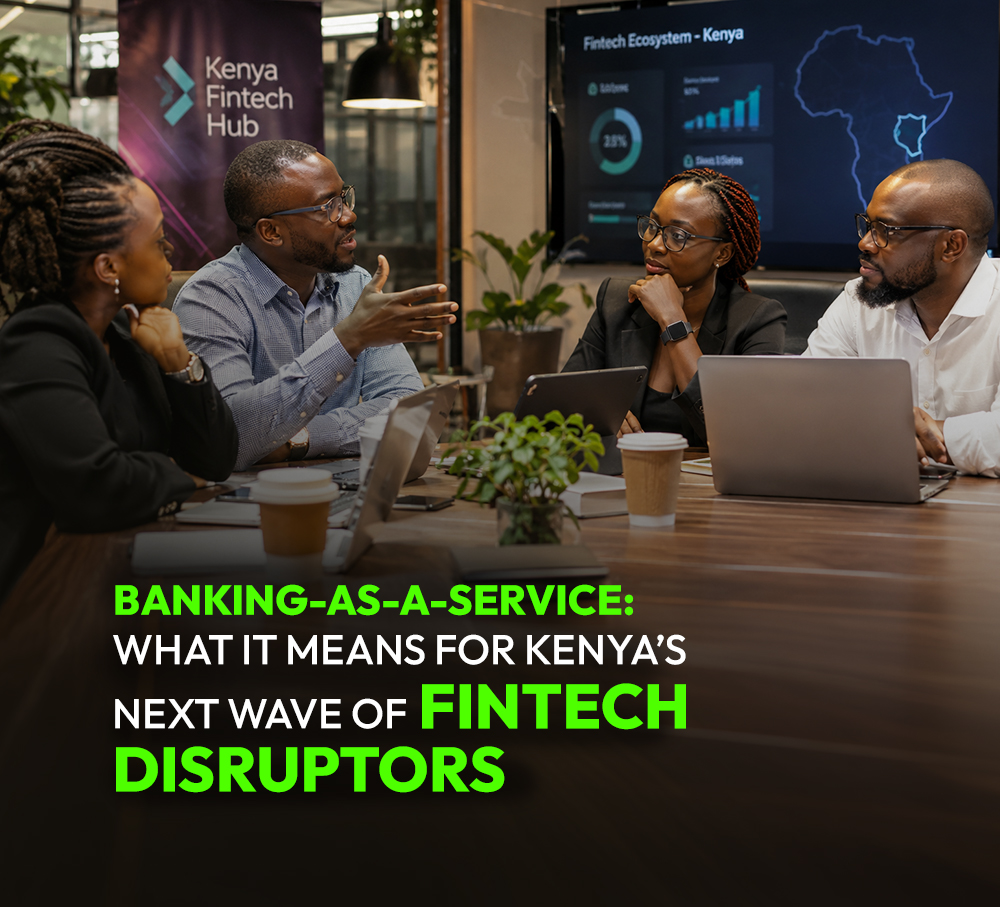
Kenya’s financial services sector has demonstrated how mobile technology can widen access to payments, transfers, and digital financial products. The next phase of growth will depend on how efficiently fintech companies can offer services beyond payments without building an entire banking infrastructure themselves.
Banking-as-a-Service (BaaS) provides a model for this transition by connecting licensed financial institutions with technology platforms through application programming interfaces (APIs). For businesses exploring fintech in Kenya, this approach creates opportunities to develop financial products faster while allowing regulated partners to manage core banking functions.
Why Kenya’s Fintech Model Is Moving Towards Banking Infrastructure
Kenya’s established mobile money ecosystem has created strong consumer familiarity with digital transactions. According to the Communications Authority of Kenya, the country’s mobile money subscription penetration reached approximately 91% by June 2024. This reflects the scale of the existing digital finance infrastructure, although subscription penetration does not represent unique users or prove that every consumer has access to formal credit.
The next opportunity lies in connecting payments with savings, lending, insurance, and business finance. Rather than obtaining every banking capability independently, fintech firms can collaborate with licensed institutions that provide regulated financial infrastructure.
This model supports digital transformation in Kenya by helping financial institutions and technology businesses introduce services through existing digital channels. For startups, it can reduce initial infrastructure requirements; for established banks, it creates additional distribution channels and potential sources of fee income.
The BaaS Stack: From Core Banking to Customer Interface
A functioning BaaS model brings several technical and operational layers together. Core banking systems maintain accounts and transaction records, while payment rails facilitate fund transfers. APIs connect these services with fintech applications, merchant platforms, and customer-facing interfaces.
Identity verification, transaction monitoring, fraud detection, reconciliation, and reporting form additional layers. Cloud-based infrastructure can support flexible capacity and deployment, provided that data protection, security, and regulatory requirements are addressed. This is where cloud banking initiatives may support new products without requiring every fintech to maintain a complete banking technology stack.
However, API connectivity alone does not create a viable banking service. Reliable integrations, clear error handling, transaction traceability, disaster recovery, and effective customer support are equally important. Businesses should test the full transaction journey before releasing products to the market.
The Embedded Finance Opportunity for Kenyan Fintechs
Embedded finance allows businesses to integrate financial services into platforms that customers already use. E-commerce companies could offer merchant payment facilities, agricultural platforms could connect farmers with suitable financing providers, and payroll systems could facilitate access to savings products.
A well-designed fintech solution can help small businesses manage collections, reconcile payments, and access financial products through familiar interfaces. These services could be especially useful to micro, small, and medium-sized enterprises that face administrative barriers when managing multiple financial providers.
For fintech founders, the commercial case depends on customer demand, transaction volumes, acquisition costs, and sustainable revenue models. Banks must also assess whether new distribution partnerships reach underserved customers without creating unacceptable credit or operational risks.
Making API Partnerships Secure and Compliant
BaaS partnerships must comply with applicable Kenyan financial regulations, including relevant Central Bank of Kenya requirements, the Data Protection Act, 2019, payment service regulations, and applicable anti-money laundering and counter-terrorism financing obligations, depending on the services provided.
Before integration, partners should establish secure authentication, encryption, access controls, audit logs, consent management, and procedures for detecting suspicious transactions. They must also agree on incident reporting, vulnerability testing, data retention, and third-party risk assessments.
Regulatory responsibility cannot simply be transferred through a technology agreement. Licensed institutions and fintech operators should obtain appropriate legal and compliance advice to clarify their respective obligations before launching a product.
What Banks and Fintechs Must Agree On Before Scaling
Successful partnerships require commercial clarity alongside technical readiness. Before launch, both parties should establish:
- Ownership and accountability: Define responsibility for onboarding, customer complaints, fraud investigations, regulatory reporting, and dispute resolution.
- Commercial terms: Agree on transaction fees, revenue sharing, minimum commitments, settlement cycles, and pricing changes.
- Service reliability: Set measurable uptime targets, incident response times, support arrangements, and recovery procedures.
- Data governance: Document permitted data use, access rights, consent requirements, retention periods, and exit arrangements.
- Growth criteria: Track active customers, transaction success rates, fraud losses, service costs, and customer retention.
A controlled pilot can validate these assumptions before a broader rollout. Banks and fintech institutions should use measurable results to decide whether the partnership is ready to expand.
Build the Next BaaS Partnership at WFIS Kenya!
The future of Banking-as-a-Service in Kenya will depend on how effectively financial institutions and technology providers turn API connectivity into useful, everyday financial services. From simplifying merchant payments to connecting businesses with financing solutions, the opportunity lies in embedding banking capabilities where customers already conduct their activities.
Achieving this requires stakeholders, banks, fintech providers, and technology partners to align their technical capabilities and commercial incentives from the outset, with clear performance measures guiding decisions on expansion.
Scheduled on 2 March 2027 at the Edge Convention Centre in Nairobi, the World Financial Innovation Series (WFIS) will bring together industry leaders to explore emerging financial opportunities in Kenya. As the financial services industry explores new means and approaches to collaboration, the event provides a setting to examine how banks and fintechs can move towards practical, customer-focused applications of embedded finance.
The resulting conversations will help inform how Kenya’s financial ecosystem approaches the next generation of digital banking partnerships.
Frequently Asked Questions (FAQs)
1. What is Banking-as-a-Service?
Banking-as-a-Service enables businesses to integrate banking capabilities through APIs provided by financial institutions or specialised providers, subject to applicable licensing and regulatory requirements.
2. How can BaaS benefit Kenyan fintech startups?
BaaS can reduce the need to build banking infrastructure independently, allowing startups to focus on customer experience, distribution, product development, and commercially viable financial services.
3. Is Banking-as-a-Service regulated in Kenya?
Banking-as-a-Service is indirectly regulated in Kenya through underlying licensed financial institutions and payment systems.
4. What role do APIs play in BaaS?
APIs connect applications with banking functions such as account information, payments, and transaction records, enabling systems to exchange data securely under defined permissions.
5. How can banks and fintechs establish successful BaaS partnerships?
They should agree on compliance responsibilities, security controls, commercial terms, customer support, data governance, and measurable performance targets before expanding operations.