


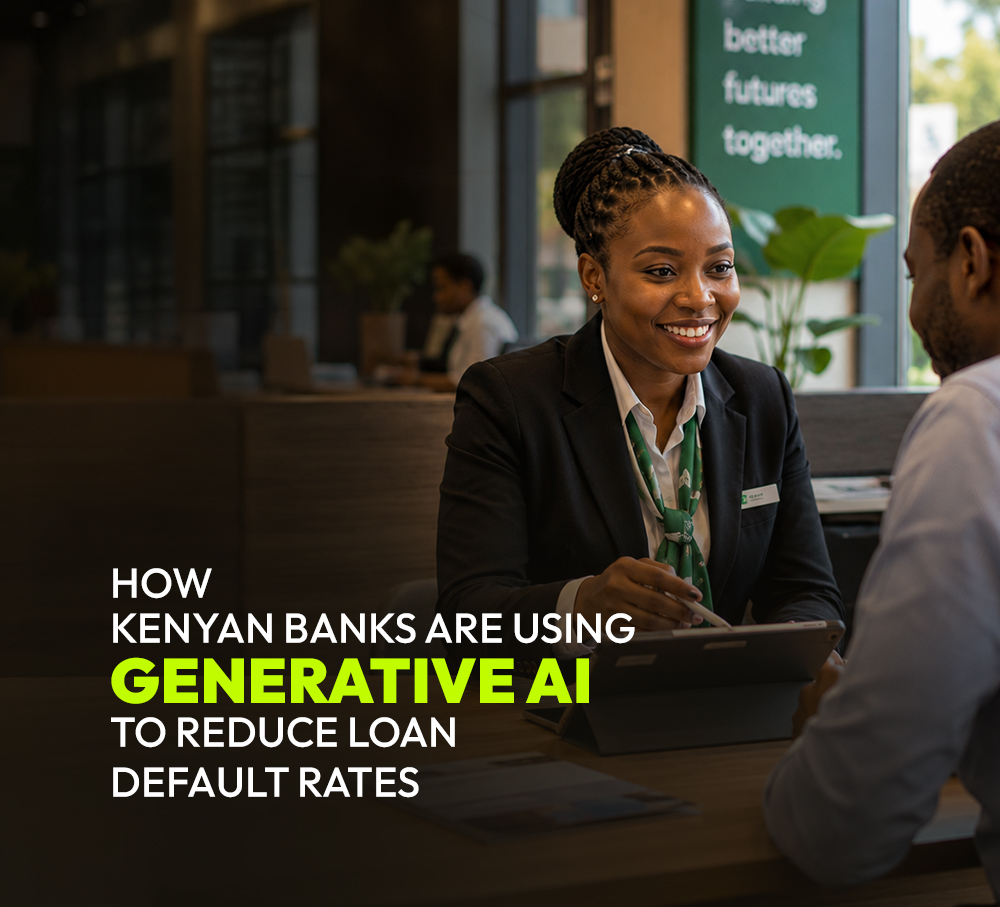
Kenyan banks are facing hundreds of billions of dollars in bad debt or non-performing loans, and that pressure is quietly rewriting how lending decisions get made. AI in banking in Kenya has moved past the pilot stage and become more of a necessity, with generative models helping banks read borrower data more accurately and flag risks before they lead to missed payments. This is not about pushing loan officers out of the loop but giving them sharper tools. From credit scoring to fraud detection, generative AI is changing how Kenyan lenders assess risk, price loans, and support borrowers before repayment problems spiral into defaults.
The Rising Challenge of Loan Defaults in Kenya
Why Nonperforming Loans Continue to Grow
In mid-2025, Kenya’s bad debt reached a record Sh717 billion, or 17.7% of total loans. By January 2026, this default rate improved slightly to 15.5%, though it remains above recommended levels. The rise in defaults is driven by higher interest rates, tighter household budgets, and repayment struggles in sectors like construction, trade, and personal lending. The Central Bank’s revised Risk-Based Credit Pricing Model, anchored in the KESONIA reference rate, now requires banks to price loans based on individual borrowers’ histories rather than blanket assumptions, underscoring the need for sharper risk-management tools in digital banking in Kenya.
How Generative AI Is Reshaping Credit Risk Assessment
From Static Scoring to Intelligent Decisioning
Traditional credit scoring relied on fixed thresholds such as income, collateral value, and past repayment history. These rigid models often failed thin-file borrowers, particularly small business owners and informal earners, who make up a large share of Kenya’s working population. Generative AI takes a different approach, analysing structured and unstructured data together, including transaction histories, mobile money activity, and spending behaviour, to build a fuller picture of each borrower. A recent Central Bank survey found that 65% of lenders already using AI apply it specifically to credit risk scoring, with digital credit providers leading at 80% adoption. That is what smart banking in Kenya looks like in practice, a measurable shift in how decisions get made.
Key Applications of Generative AI in Kenyan Banking
Turning Data Into Smarter Lending Decisions
Generative AI now touches several functions across Kenyan financial institutions.
Credit Risk Scoring
Models trained on historical and alternative data predict repayment likelihood with far more precision than manual underwriting, cutting approval times and mispriced loans.
Fraud and Cybersecurity Support
Generative systems monitor transaction patterns in real time and flag anomalies before they lead to losses, a growing priority as AI in banking in Kenya is adopted.
Customer Service and Engagement
AI-powered assistants now handle routine loan queries and repayment reminders, freeing staff to spend time on borrowers who need a human conversation.
Product Personalisation
Lenders increasingly tailor loan sizes, tenures, and interest rates to actual financial behaviour instead of broad customer segments.
Portfolio and Risk Management
Generative AI simulates economic stress scenarios across loan books, helping risk teams spot weak points before defaults show up in the numbers.
Commercial banks still trail digital lenders in adoption, at just 45%, but 92% of those not yet using AI say they plan to introduce credit-scoring tools soon.
Benefits for Banks and Borrowers
A More Balanced Lending Ecosystem
Banks gain shorter underwriting cycles, lower operating costs, and default predictions that hold up better under scrutiny. Borrowers, especially those without a long credit history on paper, gain access to fairer loan terms based on how they actually manage money rather than on rigid documentation. Both sides benefit from the same underlying shift, which makes smart banking in Kenya a practical outcome.
Challenges and Considerations in AI Adoption
What Banks Must Address Before Scaling AI
Adoption is not without friction, and banks that ignore this will pay for it later. Data privacy remains a genuine concern under Kenya’s Data Protection Act, particularly when models pull from alternative sources such as mobile phone records. Algorithmic bias is another real risk, since a model trained on incomplete data can disadvantage entire groups of borrowers without anyone noticing until it is too late. Legacy IT systems in many established banks also slow integration. Building a compliant banking solution that Kenyan institutions can trust requires skilled data teams working alongside experienced credit officers, not just new software.
The Road Ahead for AI-Driven Lending in Kenya
Building a Resilient and Inclusive Financial Future
As the Risk-Based Credit Pricing Model matures and KESONIA settles in as the standard reference rate, accurate borrower data will matter more than ever. Generative AI is on track to become the core infrastructure in Kenya’s digital banking, supporting credit scoring and broader financial inclusion for MSMEs, youth-led ventures, and women-led enterprises that have struggled to access affordable credit. Regulatory clarity and stronger data governance will decide how quickly this potential lowers default rates across the sector.
Discover What’s Next for AI in Kenyan Banking With WFIS Kenya
Kenyan banks are entering a period where technology, regulation, and borrower behaviour intersect more closely than before. World Financial Innovation Series (WFIS) Kenya closely follows this shift, covering how generative AI intersects with fraud prevention, AML compliance, and digital lending across the region’s banking sector. For professionals evaluating the next banking solution that Kenyan businesses will depend on, this coverage offers a grounded view of where credit risk management is heading.
Frequently Asked Questions
What is generative AI in banking?
Generative AI in banking refers to advanced models that analyse financial data patterns to predict repayment behaviour and detect fraud.
How does AI reduce loan defaults?
AI reduces loan defaults by improving credit scoring accuracy, identifying repayment risk earlier, and enabling faster, better-informed lending decisions.
Which Kenyan lenders use AI most?
Digital credit providers lead adoption in Kenya, followed closely by microfinance banks, while commercial banks currently trail in AI usage.
Is borrower data safe with AI systems?
Kenya’s Data Protection Act and Central Bank regulations require lenders to safeguard customer information used within AI-powered credit systems.
Will AI replace loan officers in Kenya?
No, generative AI supports loan officers by handling data analysis, while humans continue managing judgment calls, exceptions, and customer relationships.