


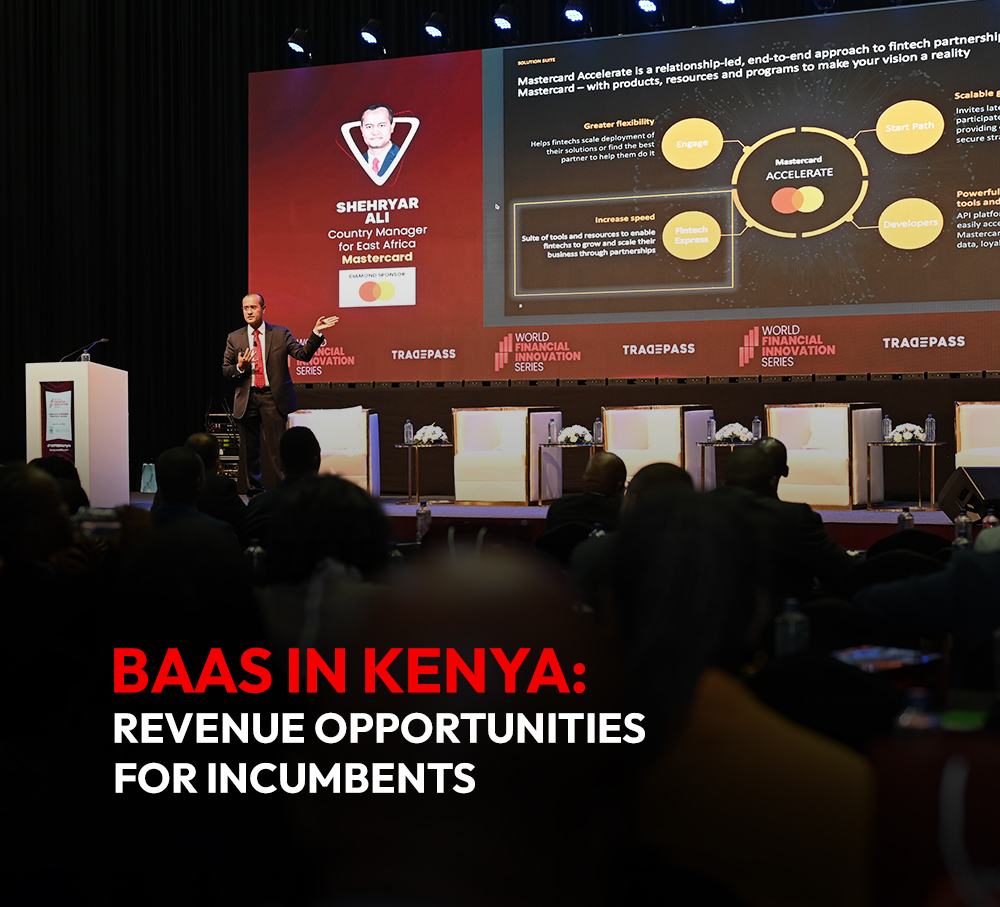
Kenya’s financial services sector has always been a testing ground for bold ideas – from mobile money to platform-driven lending models.
Today, a new shift is quietly reshaping how banks think about growth: Banking-as-a-Service (BaaS). Instead of competing head-on with every fintech solution Kenya has produced, incumbent banks are beginning to reimagine themselves as enablers, providing regulated infrastructure, licenses, and balance sheets to power third-party innovation.
As digital banks in Kenya continue to emerge alongside embedded finance models, BaaS offers traditional institutions a way to stay relevant without rebuilding everything from scratch. It allows banks to monetize what they already do well – trust, compliance, and scale – while partnering with agile ecosystems.
In a market where margins are tightening and customer loyalty is fluid, BaaS is becoming less of an experiment and more of a strategic imperative for long-term sustainability.
Why BaaS is Becoming a Priority in Kenya
There are several forces converging to make BaaS not just viable, but essential for Kenyan banks looking to maintain relevance and capture new revenue streams.
The following factors illustrate why.
A. Digital Customer Expectations
Kenyan consumers increasingly expect instant payments, seamless onboarding, and personalized financial journeys. These experiences are often delivered faster by non-bank platforms compared to traditional channels, thereby pushing banks to rethink their delivery models.
B. Fintech Growth & Ecosystem Partnerships
The rapid growth of Kenyan fintech startups – spanning lending, payments, savings and insure-tech – has created a rich partnership landscape. BaaS allows banks to plug into this ecosystem instead of competing with it.
C. Regulatory Direction
Regulators are gradually encouraging innovation through controlled frameworks, interoperability, and digital finance guidelines. This creates room for collaboration whilst maintaining systematic stability.
D. Margin & Growth Pressure on Incumbents
With lending spreads under pressure and customer acquisition costs rising, traditional revenue models are no longer sufficient.
BaaS therefore enables banks to unlock recurring fee-based income – from API usage to transaction fees and platform licensing – while diversifying beyond balance-sheet-heavy growth.
With lending spreads under pressure and acquisition costs rising, traditional revenue models are no longer sufficient. BaaS enables banks to unlock fee-based income and diversify beyond balance-sheet-heavy growth.
What BaaS Means for Kenyan Incumbents
For incumbent banks, BaaS represents a fundamental reconfiguration of their business model, and not merely an IT modernization initiative.
The shift involves eliminating traditional banking operations with modular, API-accessible capabilities that can be utilized by external parties such as fintechs, retailers, and software platforms; who embed financial services directly into their customer journeys.
In practice, BaaS allows banks to embed their core services, accounts, payments, lending, and compliance into third-party journeys. Whether supporting a logistics platform, agri-tech ecosystem, or digital commerce app, the bank remains invisible to the end-user but central to the transaction.
For many institutions, this also modernizes their banking solutions in Kenya, enabling faster innovation cycles without disrupting core operations. The result is greater reach, lower marginal costs of distribution, and stronger relevance in a platform-driven economy.
New Revenue Streams from BaaS
Banks that deploy BaaS strategies can monetize their infrastructure through several revenue models – each of which, as stated below, leverage the bank’s regulated charter while shifting customer acquisition and engagement to external partners.
A. API Usage & Platform Fees
One of the most direct monetization models is charging partners for API access.
Banks can generate recurring revenue based on transaction volumes, API calls, or tiered service levels. As more platforms integrate financial features, API-driven income becomes predictable and scalable.
B. Embedded Accounts & Deposits
Through BaaS, banks can offer embedded wallets and accounts within third-party platforms.
These deposits remain on the bank’s balance sheets while acquisition and engagement are driven externally. Such a model supports low-cost deposit growth without expanding physical infrastructure.
C. White Label & Co-Branded Lending
Banks can power lending products for fintechs, marketplaces, or cooperatives under white-label or co-branded arrangements.
The partner, leveraging its customer relationships and distribution channels, manages customer experience while the bank controls underwriting, funding, and compliance – creating shared upsides with controlled risk.
D. Payments as a Service for Platforms
Payments are a high-volume opportunity.
By offering payments-as-a-service, banks can support merchant acquiring, disbursements, and cross-platform settlements. This is particularly relevant as cloud banking in Kenya enables scalable, real-time processing.
E. Data & Compliance Services
Beyond transactions, banks can monetize compliance capabilities such as KYC, AML screening, and reporting. For startups navigating regulation, outsourcing these functions to licensed institutions reduces friction and accelerates go-to-market timelines.
Together, these revenue streams diversify income beyond traditional margins and position banks as regulated infrastructure providers within Kenya’s expanding digital economy.
Operating Foundations Banks Need
Successful BaaS strategies rest on modern foundations.
An API-first architecture enables banks to expose services consistently; whereas de-coupled, cloud-ready services support scalability and faster partner onboarding, making cloud banking in Kenya a practical necessity rather than a future goal.
Equally critical is structured partner lifecycle management – spanning due diligence, onboarding, ongoing performance monitoring, and controlled off-boarding. Banks must also establish cross-functional governance teams that integrate technology, compliance, legal, and commercial functions. Without this organizational alignment, BaaS initiatives risk devolving into isolated pilots instead of scalable, sustainable platforms.
Governance, Risk & Regulation
Strong governance ensures BaaS growth does not compromise stability.
Banks must maintain regulatory alignment with clear accountability between the institution and its partners. Defined roles and responsibilities help prevent operational gaps, while risk and compliance ensures controls are embedded into APIs and workflows.
Portfolio-level oversight is also essential. As the number of partners grows, banks need centralized visibility into exposure, performance, and concentration risks. This disciplined approach allows innovation to scale safely within Kenya’s evolving regulatory environment.
Why WFIS Matters Most Right Now
As Banking-as-a-Service fundamentally reshapes how financial institutions create and capture value, industry-wide collaboration has become essential to navigating this transformation responsibly.
___________, the World Financial Innovation Series (WFIS) in Kenya convenes banks, fintech innovators, regulators, and technology providers to examine practical strategies for platform banking, embedded finance, and sustainable ecosystem partnerships within Kenya’s rapidly evolving financial landscape.
The event offers decision-makers a meticulously curated environment to explore both digital banks and established incumbents in order to modernize infrastructure, co-create growth models, and unlock diversified revenue streams.
WFIS therefore provides a focused platform for exchanging practical insights, measuring progress against regional peers, and ensuring innovation aligns with regulatory frameworks and market realities.
The event also features panel discussions led by seasoned, multidisciplinary industry experts examining critical issues at the intersection of technology, regulation, and market evolution.
Key topics include:
- ‘Driving Inclusive Growth in FSI Through Forward-Thinking Regulatory Frameworks’
- ‘Forecasting Kenya’s Financial Future with Scalable, Secure, and Smart Clouds’
- ‘A Realistic Approach to Generative AI & Data Analytics in Finance’
- ‘Reinventing AML in the Cloud,’ and many more.
Event Details:
WFIS – World Financial Innovation Series – Kenya
Date: 3 March 2026
Venue: Edge Convention Centre, Nairobi, Kenya
Whether participating as a delegate, sponsor, or exhibitor, WFIS Kenya provides direct access to both the strategic conversations shaping Kenya’s banking future as well as the decision-makers, stakeholders, and innovators practically shaping it.
Join peers and partners in Nairobi to engage with scalable BaaS frameworks, ecosystem collaboration models, and the infrastructure driving next-generation financial services.
Register now!